
Stranger Video Chat
Stranger video chat is the only online format that puts two people genuinely face-to-face without a prior relationship, a shared history, or a profile that arrived before the conversation did. Text tells you what someone wrote. Video shows you how they responded — the micro-expression before they decided what to say, the pause before a complicated answer, the involuntary smile when something lands. Those signals are not performable the way typed text is, which is precisely what makes a live video call with a stranger produce a quality of exchange that no other digital format replicates at anywhere near the same fidelity.
Why Video Makes the Stranger Encounter Different
Human beings read faces constantly and largely without effort. Before you have processed someone’s first sentence, you have already formed an impression from dozens of non-verbal cues: the direction of their gaze, the tension in their jaw, the way their expression moved when they first saw you on screen. None of that information is available in text. Some of it survives in voice. All of it is present in video. That is why a two-minute video call tends to feel more like actual human contact than a two-hour message thread.
When the video encounter is with a stranger — someone whose face you have never seen, from a country you may have never visited, with no prior context between you — the combination produces something specific. The novelty keeps your attention fully engaged. The face keeps the emotional channel open in a way text does not. And the absence of any prior relationship removes the social management that typically shapes how both parties present themselves. The result is, at its best, more genuine than most of the identified communication we do online.
This platform was built specifically for that encounter: stranger video chat at scale, with 145 countries in the daily pool, HD quality on all connections, end-to-end encrypted streams, and moderation that maintains the environment at the standard the format requires. The encounter the format makes possible is supported by infrastructure that makes it reliably available rather than occasionally achievable.
A Face From Somewhere You Have Never Been
The combination of video and global randomness produces an encounter that is genuinely rare in digital social life: a face from somewhere unexpected, reacting in real time, without any prior selection having occurred. The draw from 145 countries means that face is as likely to be from Central Africa or Southeast Asia as from Western Europe. That geographic diversity, made viscerally real by the video channel, is the specific quality that users who come for stranger video chat consistently cite as what brings them back.
The Non-Verbal Channel Is What You Came For
Research on communication consistently shows that the majority of emotional and relational information is transmitted non-verbally. Video restores that channel to online interaction. A stranger’s genuine reaction — the one that appears on their face before their considered response — is information that text suppresses entirely and voice conveys only partially. The quality of encounter that people describe as memorable in stranger video chat is almost always rooted in a moment of unscripted non-verbal authenticity that the camera captured.
Spontaneity That Typed Text Cannot Produce
Typing allows editing before sending. Video does not allow editing before reacting. The spontaneity of live video response — the expression that crosses someone’s face before they decide how to respond — is qualitatively different from any deliberated reply. When both parties are on camera and both know it, the conversation operates at the speed of thought rather than the speed of composition. That pace produces authenticity that the text format architecturally prevents.
What Makes This Stranger Video Experience Work
A live video call with a stranger requires specific technical and design conditions to deliver on its promise. Every feature below addresses one of those conditions — all available from the first session, free, without an account.
Under Two Seconds to a Live Face
The encrypted relay handshake and pool draw that connect you to another live camera take under two seconds from pressing the button. No TURN server negotiation visible to the user, no waiting room, and no loading animation between sessions. The speed matters for this specific format: a long wait between sessions encourages deliberate preparation, and deliberate preparation works against the spontaneous quality that live video with a stranger produces at its best.
DTLS-SRTP Encrypted Video
The video stream is encrypted using DTLS-SRTP before it leaves your device. No readable video content exists on our relay at any point during any session. The encryption is not a setting you activate — it is the only mode in which the platform’s video infrastructure operates. The relay handles packet routing without reading packet content. When the session ends, the encryption keys are discarded and no readable version of the stream can be reconstructed from anything our infrastructure holds.
145 Countries in the Video Pool
The video-mode pool spans over 145 countries with active daily participation in each. No geographic premium exists — the complete global community of video-active participants is available to every visitor from every country from the first session. The face that appears when you press the button could come from any of those 145 countries with no weighting toward proximity. That breadth is structural: it is a consequence of the zero-cost, zero-account access model that removes every barrier to participation.
No Video Frame Retained After Call
When a video session closes, no frame, no transcript of any accompanying text, and no metadata record linking either participant to the session is retained. The encryption means no readable content ever existed on our infrastructure to retain. The session is gone because it was never accessible in a persistent form. That clean closure applies to every session in every mode for every user. There is no archive, no accessible history, and no retrievable record of the video call you just had.
Full Control Mid-Call
Camera, microphone, and text input can each be toggled independently at any point during a live video session without ending the call. Disable your camera while keeping voice. Mute your microphone while keeping video. Add text alongside either or both. Each change takes effect immediately and the other participant’s experience adjusts accordingly. No renegotiation of the session is required for any mode change, and no change closes or resets the connection that is already established.
HD Video From the First Frame
The video stream delivers HD quality on standard connections and adapts gracefully to slower ones rather than dropping. There is no standard-definition tier for free users and a better-quality tier for paying ones — quality is determined by your hardware and connection, not by your subscription. The adaptive bitrate management maintains a live feed at reduced resolution on constrained connections instead of failing entirely, which matters particularly for users in markets with variable mobile data quality.
Why This Platform Delivers Stranger Video at Its Best
Stranger video chat requires more than a working camera and a random draw. The quality of the encounter depends on the pool it draws from, the safety of the environment, and the reliability of the technical experience. These four qualities explain where this platform meets all three standards.
Safety Standards That Match the Video Exposure
Live video is the most personally exposing communication format available online. The safety standards required to maintain a trustworthy video environment are correspondingly high. Human moderation that responds to every report within minutes, permanent removal for confirmed violations, relay routing that prevents IP address exposure, and encryption that protects the stream throughout — these are not supplementary features. They are the baseline requirements for an environment where people are willing to put their face on camera for a stranger.
A Pool Diverse Enough to Produce Real Surprise
The value of stranger video chat is proportional to how genuinely different the stranger is from your existing social world. A pool concentrated in a handful of markets produces faces that are geographically varied but culturally narrow. A pool spanning 145 countries — maintained at that breadth by a zero-cost model that removes every access barrier — produces faces from places that most users have never encountered in any digital context. That genuine novelty is what the video channel makes viscerally real rather than abstractly global.
Equivalent Quality on Any Device
Stranger video chat on a phone browser delivers the same quality as stranger video chat on a laptop — the same video quality, the same feature set, the same match speed, and the same safety infrastructure. No app installation is required. No mobile-specific limitation reduces the experience. The WebRTC implementation used for video was designed for cross-device equivalence, and the adaptive bitrate management handles the range of connection speeds typical across mobile devices and markets reliably.
An Environment Worth Returning Your Camera To
Whether you return to a video platform depends on whether the experience the last time was worth having. The quality of the pool, the reliability of the technical experience, and the safety of the environment collectively determine that. This platform’s pool is maintained by moderation, its technical infrastructure is actively invested in, and its safety standards have been consistent since launch. The evidence that all three are working is the four million daily video sessions conducted by users who found it worth coming back for.
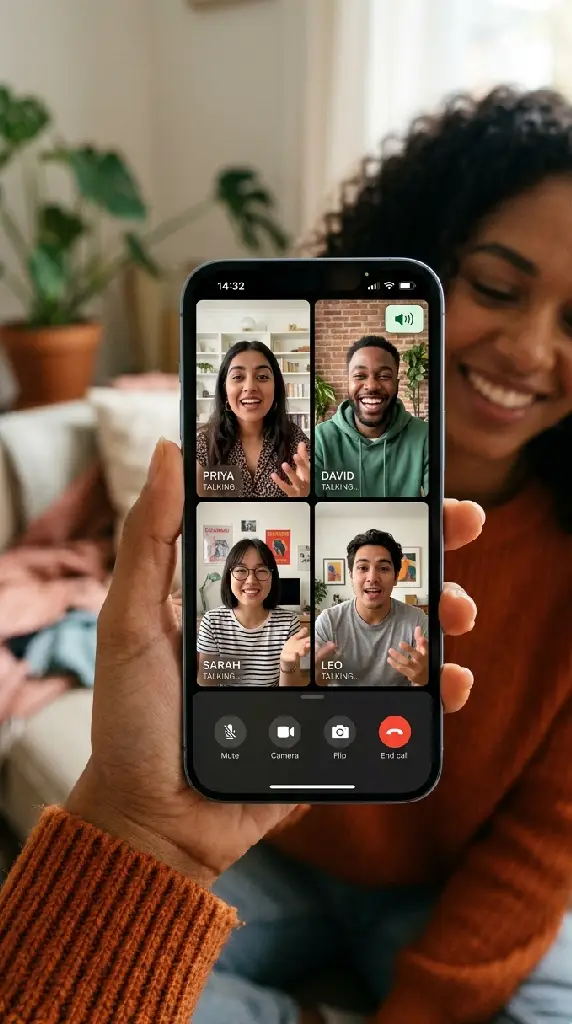
Stranger Video Chat Against Every Alternative
Live video with a stranger is a specific experience that most platforms do not offer and the few that do deliver with varying quality. This table maps where each alternative actually lands on the dimensions that matter for the stranger video format.
| Capabilities | Stranger Video Chat | OmeTV | ChatHub | Emerald Chat |
|---|---|---|---|---|
| 💳 Cost Model | ✔ Free | ✔ Free | ~ Freemium | ~ Freemium |
| 📝 Account Needed | ✔ None | ✘ Required | ✔ None | ✘ Required |
| 🔒 Data Encryption | ✘ None | ✔ Secured | ~ Partial | ✔ Full |
| 💾 History Logs | ✘ Stored | ✘ Stored | ✔ None | ✔ None |
| ⚧️ Gender Filtering | ✔ Free | ✘ Premium | ✘ None | ✔ Free |
| 🎯 Niche Matching | ✘ None | ~ Limited | ✔ Advanced | ✔ Advanced |
| 📱 Mobile Accessibility | ✔ Web & App | ~ App Only | ✔ Web & App | ~ App Only |
| 📥 Installation Needed | ✔ Browser-ready | ✘ App Required | ✔ Browser-ready | ✘ App Required |
| 👮 Content Moderation | ✔ 24/7 Active | ✔ Strict | ~ Automated | ✔ 24/7 Active |
| 👻 User Anonymity | ~ Partial | ✘ Account Linked | ✔ Complete | ✘ Profile Based |
Video Privacy at the Standard the Format Demands
Putting your face on camera for a stranger requires a higher standard of privacy protection than text chat. Every protection below was designed specifically for live video in a stranger context — where neither party has prior trust and the exposure is personal.

🔒 What Every Stranger Video Session Is Protected By
- DTLS-SRTP video encryption applied before the stream leaves your device — the relay never holds a readable copy
- Relay routing prevents your IP address from being transmitted to or derived by the other participant’s device
- No video frame, audio segment, or text message is written to persistent storage during or after any session
- No facial recognition, biometric inference, or visual analysis of any kind is performed on any stream
- Camera permission is tab-scoped and released automatically when the browser tab closes
- Human moderation reviews every in-session report within minutes; reported participants are suspended immediately
- No advertising, analytics, or third-party tracking script observes any session on any page of this platform
Why Live Video Requires Stronger Privacy
Text communication carries information about what you chose to say. Live video carries information about who you are at the moment you are saying it — your face, your background, your physical environment, your unguarded reactions. The privacy standard required to protect that quality of exposure is meaningfully higher than the standard required for text. This platform was built with that higher standard as the design requirement for video specifically, not as a general-purpose privacy policy applied uniformly to all modes.
What Your Camera Reveals vs. What the Platform
Your camera reveals what is visible in your frame to the person on the other screen. That is the intended and consented exposure of the format. What the platform holds about that exposure is nothing: the encrypted stream passes through our relay without being readable, no frame is retained, and no analysis is performed on the video content. The other person sees you live. The platform holds no record of what they saw. Those are different categories of exposure and they are treated differently here.
How the
Relay
Shields
Your
Location
Early stranger video platforms that used direct peer-to-peer connections exposed both participants’ IP addresses to each other, enabling recontact and location inference. Our relay architecture routes all video traffic through our infrastructure without bridging the direct connection between devices. The stranger on screen cannot derive your network address from the video call. You cannot derive theirs. Neither party can use the connection to locate the other. That protection applies from the first frame to the last in every session.
Moderation That
Protects the Video Environment
A live video environment without effective moderation degrades quickly into one that most users do not want to put their face into. Human moderation that reviews every report within minutes and applies permanent consequences for confirmed violations is what maintains the quality of the video pool. Users who find specific sessions unacceptable have immediate access to a report mechanism that reaches a human reviewer, not an automated triage queue. That responsiveness is what makes the environment trustworthy enough to use repeatedly.
When the Stranger’s Face Changed the Conversation
These six accounts describe specifically what the video dimension of stranger chat produced that text or voice alone could not have. In each case, it was a moment of unscripted visual information that made the encounter distinctively valuable.
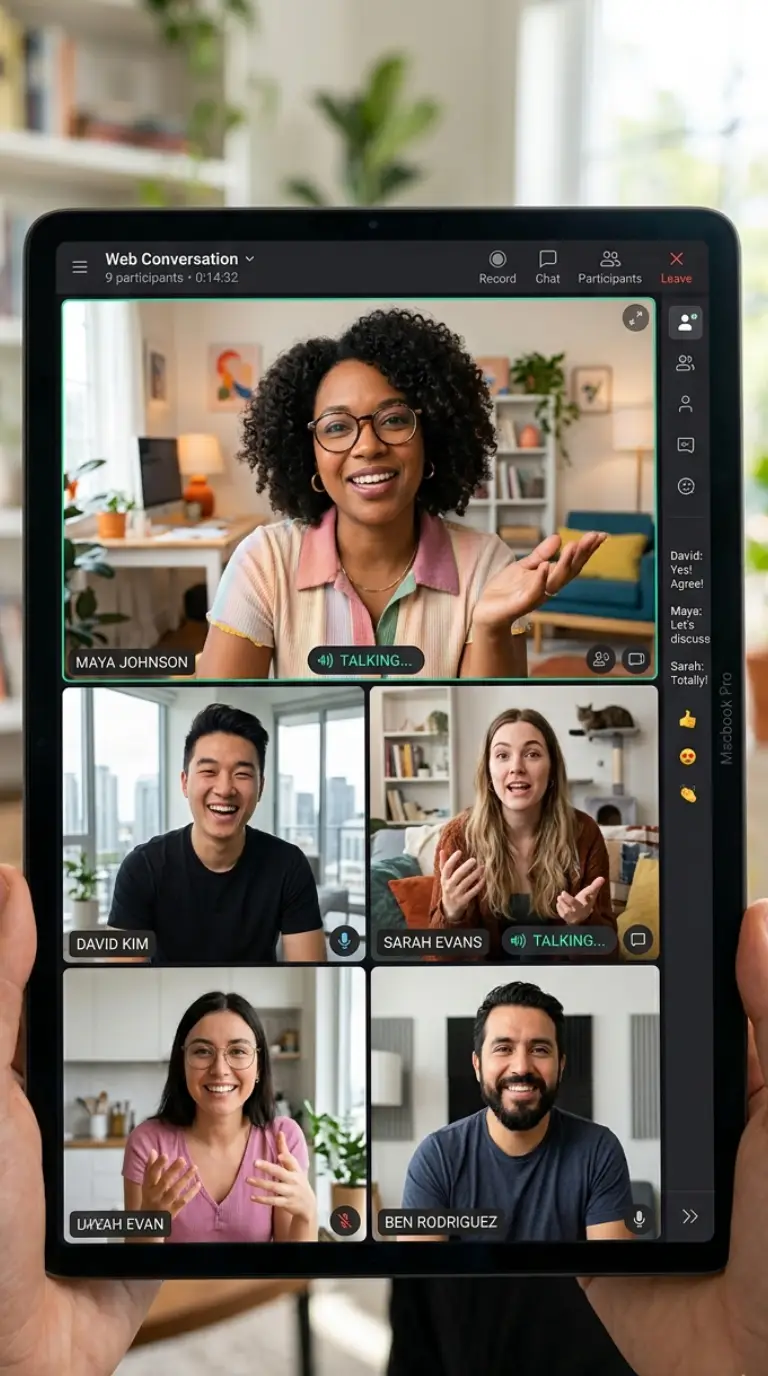
The Face Is Worth More Than the Message
There is a reason that human beings, given a choice between a text message and a video call with someone important to them, choose the video call. The face carries information that cannot be compressed into words. The involuntary reactions, the genuine expressions, the non-verbal acknowledgements that accumulate throughout a conversation and tell you, at a level below language, that the person on the other end is actually present and actually responding to you — none of that survives the translation to text. Stranger video chat is what restores all of that to an encounter with someone new.
Four million live video sessions happen here every day. Each one is a face from somewhere in the world reacting in real time to another face from somewhere else. The information density of that exchange — the non-verbal content, the spontaneous response, the presence of two people simultaneously attending to each other — is higher than anything asynchronous digital communication produces. That is what people come here for. The platform’s only job is to make the encounter technically reliable, safe, and widely accessible enough that four million people a day can have it.
The technical requirements have been met. HD quality that adapts to connection conditions. DTLS-SRTP encryption from first frame to last. Relay architecture that shields location. Moderation that responds in minutes. A pool of 145 countries drawn from without weighting. All of it free, all of it available without an account, all of it in your browser right now. What is left is pressing the button.
Press it. A face from somewhere is waiting.
Where the Video Pool Is Active Right Now
The 145-country video pool reflects where both connectivity infrastructure and appetite for live video with strangers are strongest. These four regions represent where video-mode engagement is growing most consistently and producing the most distinctive encounters for users from other parts of the world.
The Nile Corridor
Egypt, Sudan, and Ethiopia all have active video-mode communities. Arabic, Amharic, and English are the most common session language preferences from this cluster. Video-mode sessions from the Nile Corridor show above-average duration compared to the platform-wide mean, and users here demonstrate a notably high preference for enabling video from the first moment of a session rather than transitioning from text. The visual engagement quality of this cluster’s sessions is consistently cited in user feedback.
The Himalayan Region
Nepal, Bhutan, and the highland regions of India contribute active video sessions primarily through mobile browsers on 4G connections. Nepali, Dzongkha, Hindi, and English are represented in session language preferences. The adaptive bitrate management is specifically significant for this cluster, where connection speeds vary widely between urban and mountain locations. Video quality is maintained across that range through quality scaling rather than session failure, making the platform reliably accessible throughout this geographically diverse region.
The Insular Southeast Asia
Indonesia, the Philippines, and East Timor all generate high-volume video sessions. Bahasa Indonesia, Filipino, Tetum, and English are all represented in session language preferences. This cluster shows one of the highest rates of video-mode engagement of any Southeast Asian regional group, with users consistently enabling camera from the first session and maintaining video throughout longer exchanges. Cross-continental matching rates for this cluster are among the highest in the platform’s daily draw.
The
Sahel
Chad, Niger, and Mali all contribute active video sessions to the global pool. French, Arabic, Hausa, and Fulani are represented in session language preferences. The platform’s browser-based model is specifically relevant in the Sahel, where app installation barriers frequently prevent participation in video platforms that require a download. Video session growth from this cluster reflects the expanding mobile browser capability in these markets and the zero-cost entry condition that makes the platform accessible when no alternative would be.
Questions About Stranger Video Chat on This Platform
These questions address the specific mechanics and character of live video with strangers — what it produces, how it works, and what to expect from the first session.
1. Do I have to enable video, or can I join with text only?
Video is available but never required. You can join a session with camera disabled and conduct the conversation in text or voice. The camera can be enabled at any point during the session and disabled again at any point. Neither enabling nor disabling video ends the session or requires the other participant to do anything. The platform treats all modes as equally valid and does not apply any default that assumes video participation without your having activated it.
2. Can the stranger on my screen record the video call?
The platform provides no recording mechanism for participants and does not record sessions itself. However, the other person could use third-party screen recording software on their own device, which is outside the platform’s technical control — the same limitation that applies to any in-person or digital conversation. The practical implication is the same one that applies to any video communication: exercise the same judgement about what you show on camera and what you say that you would in any face-to-face context with someone you do not know.
3. How good is the video quality on a slow connection?
The adaptive bitrate management scales video resolution to match available bandwidth in steps rather than dropping the session when a full-quality stream cannot be sustained. On a very slow connection, the picture may be reduced to a lower resolution, but the session remains live and the other person remains visible. Audio quality is protected at all resolution levels. For users in markets with variable mobile data — which applies to a significant portion of the 145-country pool — this means a usable video call on connections that would fail a fixed-bitrate stream.
4. Can the person I video chat with see my location?
No. Our relay architecture routes all video traffic between devices without bridging a direct connection. The other participant’s device receives your encrypted video stream from our relay, not directly from your device. Your IP address — and with it any location that could be inferred from it — is never visible to them through the connection. What they can infer about your environment is limited to whatever is visible in your camera frame, which is within your control.
5. Is the video experience better here than on older random video platforms?
In most measurable respects, yes. Earlier random video platforms were not built with end-to-end encryption, did not use relay architecture to shield IP addresses, degraded in performance as they scaled, and in most cases were never rebuilt to match modern mobile browser video capabilities. This platform was built from the outset with encryption, relay routing, adaptive bitrate management, and mobile browser equivalence as baseline requirements rather than features added later. Users who remember earlier platforms consistently describe the technical experience here as a meaningful improvement.
6. What should I do if someone is behaving inappropriately on video?
Use the skip button to end the session immediately, or the report button to file a report that reaches a human moderator within minutes. Both are visible throughout every session without navigating away from the live video. The reported participant is suspended from new sessions immediately on submission. Filing a report does not require providing your name or any personal information. You can report and skip in any order, or do one without the other, based on what the situation warrants.
7. Does enabling video share anything beyond my camera image?
No. The video stream transmits what your camera captures. Your name, location, network address, and any other personal detail are absent from the stream because the platform does not hold them. The person on screen receives your video feed and nothing else from the platform. No metadata is transmitted alongside the stream that would identify you or your device. The camera permission is standard browser camera access and does not grant the platform or the other participant access to anything beyond the live video output.
8. Can I use stranger video chat on a phone without installing an app?
Yes. The full video experience is available in any mobile browser without app installation. The same adaptive bitrate management, the same encryption, and the same connection speed apply on a phone browser as on a desktop browser. Camera and microphone permissions are handled by the browser through its standard permission system. There is no app to download, no play store to navigate, and no version of the video experience exclusive to an installed application. The browser is the full experience.
9. How does this platform handle the non-consensual sharing of video from sessions?
The platform does not record sessions, so there is no session video for the platform to share or misuse. What a participant could record using external software is not within the platform’s technical control, which is why the same judgement about on-camera behaviour that applies in any video conversation applies here. Reports of confirmed external recording by a session participant are treated as a serious community standards violation. The platform cannot prevent external recording but treats evidence of it as grounds for permanent removal.
10. Is stranger video chat suitable for professional or educational use?
Many users employ the platform for professional and educational purposes: language learning, cross-cultural research, usability testing, performance feedback, and communication skills development. The platform supports those uses within its community standards. It does not provide verified professional matching, certified language exchange programmes, or any feature designed specifically for institutional use. Professional and educational applications emerge from the platform’s basic function as a global live video connection, which many users have found more useful for those purposes than dedicated tools.