
Live Chat with Strangers
Live chat with strangers is not a new concept, but a platform that executes it well — without paywalls, without performance bottlenecks, and without the kind of safety record that makes you hesitate before enabling your camera — remains genuinely uncommon. What distinguishes this platform from the alternatives is not a single feature but a set of decisions made consistently across every layer of the product: real-time connection, architectural privacy, no cost barrier, and human moderation that responds to every report rather than just the ones that trigger an automated threshold.
What “Live” Adds to the Experience
The word “live” is doing specific work here. It means you are not exchanging messages with someone who will read them later and compose a reply at their convenience. It means neither of you has had time to edit, redraft, or reconsider. The conversation is happening now, in both directions at once, with the texture and pace that all online communication used to have before asynchronous messaging became the dominant format.
That liveness changes what the conversation can be. It is harder to maintain a curated version of yourself across a live exchange than across a sequence of composed messages. The instinctive responses, the real reactions to what the other person says, the moments where you change direction mid-sentence because something landed differently than you expected — all of these are present in a live session in a way that no other format quite replicates.
The stranger dimension compounds this. You are talking to someone who has no prior model of who you are and no investment in a particular version of you being true. Combined with the liveness of the exchange, that produces a specific conversational environment — direct, unmediated, occasionally surprising — that users consistently describe as qualitatively distinct from everything else available to them online.
Simultaneity Changes Everything
When two people are typing, speaking, or looking at each other simultaneously, the exchange carries information that sequential messaging cannot. The hesitation before an answer, the speed of a reaction, the decision to change topic in real time — all of it is present in a live session and absent from any format where either party composes offline before sending.
Right Now, Not Eventually
The live format is available the moment you arrive, not when someone chooses to respond to a message you sent. There is no waiting for a reply, no uncertainty about whether the other person has seen what you wrote, and no gap between sending and receiving. The conversation exists in the present tense and only in the present tense, which is precisely what makes it feel different.
Unscriptable by Nature
You can draft a message. You cannot draft a live conversation. The spontaneity of the format is not incidental — it is what makes the exchange genuinely interesting rather than managed. Both participants arrive without a script and both leave with something they did not plan to say or hear. That unscriptability is the feature that justifies every other design decision on this platform.
The Full Live Experience, No Tier Required
Every capability below is part of the standard experience for every visitor. Nothing sits behind a subscription, a daily limit, or a feature unlock. This is the complete platform, available from the first second of the first session.
Always-On Live Matching
The matching pool operates continuously across all time zones with no scheduled downtime. You are never told to come back later or placed in a queue that requires waiting. The system draws from whoever is active at the moment you press the button and delivers a connection in under two seconds. That responsiveness holds at three in the morning on a Tuesday as reliably as at peak hours on a weekend evening.
Seamless Session Switching
Moving from one live session to the next requires a single action. The current connection closes, the matching engine makes a new draw, and the next live session opens within two seconds. There is no interim screen that asks you to rate the previous session, no waiting bar, and no reloading of the interface. The transition is as immediate as the original connection.
HD Live Video, Browser-Native
The live video stream runs directly in your browser using WebRTC, delivering a minimum 720p picture without installing any additional software or granting any persistent system-level permission. The camera and microphone access required is scoped to the active tab and resets automatically when the tab is closed. There is no application to update and no background process that remains active after you leave.
Real-Time Text Voice and Video
The text input panel is available throughout every live session regardless of whether voice or video is also active. You can type while speaking, share a link mid-call, clarify a word across a language barrier, or drop back to text-only at any point without ending the session. All three channels are live simultaneously and each is independently encrypted from the moment it opens.
Live Pool Across 155 Active Countries
The live matching pool spans 155 countries with active participation in each. The language preference setting narrows the draw to speakers of your selected language, but the geographic reach of those speakers remains global. A Spanish-language preference, for example, draws from participants in Spain, Latin America, and every other country where Spanish-speaking users are currently active in the pool.
In-Session Safety at All Times
The report button, end-session control, and communication-mode toggle are all visible within the active session interface without any navigation required. Each control operates immediately with no confirmation delay. Reports route directly to a human reviewer who acts on them within minutes. The person being reviewed cannot be matched to new live sessions until the review concludes.
What This Platform Gets Right That Others Consistently Miss
The live stranger chat category has been attempted by dozens of platforms. Most fail on one of four dimensions. These are the four and why we have not failed on any of them.
Performance That Holds Under Load
Live sessions require infrastructure that scales horizontally under demand rather than degrading when the pool is busiest. Our relay network distributes load across multiple geographic nodes, which keeps connection times and call quality consistent regardless of whether a thousand people or a million people are online at the same moment. Peak hours produce no measurable change in the experience for any individual user.
A Community That Self-Sustains
With 4.5 million live sessions daily, the pool has reached the scale at which it sustains itself. Users return because the pool is large enough to consistently produce interesting connections. The pool grows because users return and recommend the platform. That self-sustaining dynamic is only possible when the product is free, accessible, and genuinely good — all three conditions have to hold simultaneously.
Privacy That Does Not Trade Off Against Live
Live communication and privacy are often treated as being in tension — the argument being that real-time requires some form of identity or logging to function safely. This platform disproves that. End-to-end encrypted live sessions, IP address shielding in real time, and zero post-session data retention are all fully compatible with the live format. The tension is a design choice, not a technical necessity.
Moderation That Responds Rather Than Surveils
The approach to keeping live sessions safe is report-driven rather than monitoring-driven. Sessions that are not reported are not reviewed. When a report is submitted, a human team member examines the flagged session and acts within minutes. This approach respects the privacy of the vast majority of sessions that do not involve problematic behaviour while maintaining a rapid and effective response to the small minority that do.
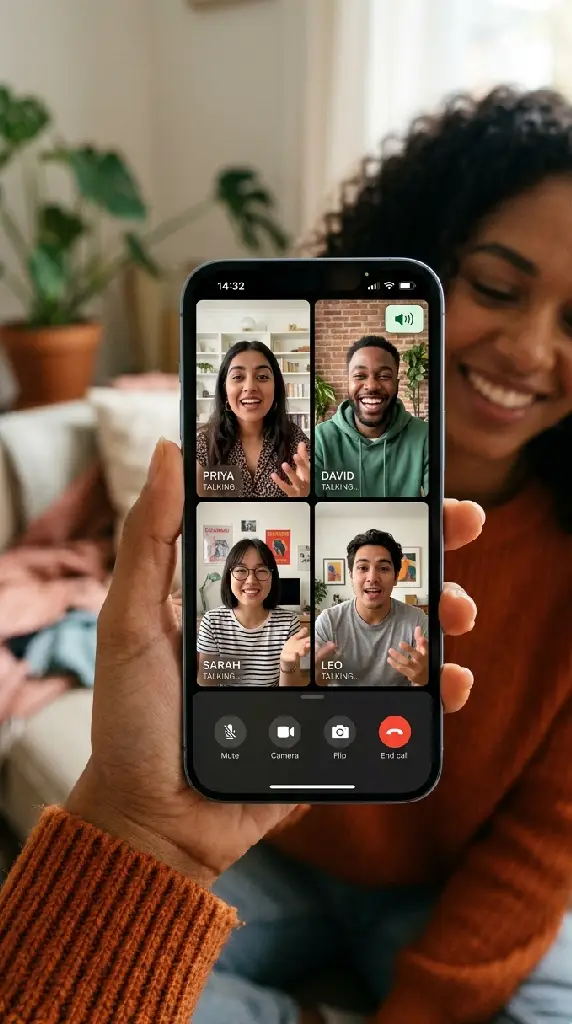
How Live Chat Compares Across Platform Types
The live dimension is not uniform across platforms that claim to offer it. This table shows specifically how the real-time quality, accessibility, and privacy of live chat varies across different types of service — not in theory, but in practice.
| Feature | Live Chat with Strangers | Omegle-style | Chatroulette | Social Media |
|---|---|---|---|---|
| 💰 100% Free Forever | ✔ Always | ✔ Free | ~ Freemium | ✔ Free |
| 🚫 No Registration | ✔ Zero | ✔ None | ✘ Required | ✘ Required |
| 🔐 End-to-End Encryption | ✔ All Sessions | ✘ None | ~ Partial | ~ Varies |
| 🗑️ Zero Chat Logs | ✔ Always | ✘ Stored | ✘ Stored | ✘ Stored |
| 🎛️ Gender Filter | ✔ Free | ✘ None | ~ Paid | ✘ None |
| 💡 Interest Matching | ✔ Free | ~ Limited | ~ Paid | ✘ Manual |
| 📱 Mobile Browser | ✔ Full | ~ Patchy | ✔ Yes | ~ App Only |
| ⬇️ No App Download | ✔ Browser | ✔ Browser | ✘ App Needed | ✘ App Needed |
| 🛡️ Active Moderation | ✔ 24/7 | ✘ Minimal | ~ Bots Only | ~ Flags |
| 🎭 Full Anonymity | ✔ Complete | ~ IP Visible | ~ Partial | ✘ Profile |
Legend: ✔ = Yes / Fully supported | ✘ = No / Not supported | ~ = Partial / Limited
Live and Private Are Not Opposites Here
The assumption that real-time communication requires sacrificing privacy is widespread and incorrect. Every protection below operates without introducing any latency or limitation to the live experience. Speed and safety are not a trade-off on this platform.

🔴 What Applies to Every Live Session
- The live stream is encrypted before it leaves your device, with no readable intermediate copy on our relay servers at any point
- Your network address is shielded from the other participant throughout the session and is never recoverable from any data we hold
- No session content is written to any database during or after the session — the live stream exists only in transit
- Browser-level camera and microphone permissions are active only while the tab is open and reset completely on close
- No fingerprinting, session-linking, or cross-visit tracking is performed on any user at any point in their use of the platform
- The report function connects directly to a human moderator with no automated filter between the submission and the review
- No audio or video content is retained following the end of a session, including in cases where a report has been submitted
Real-Time Encryption Without Latency
The encryption applied to live sessions uses DTLS-SRTP, the same protocol that enterprise video conferencing tools rely on. It adds no perceptible latency to the live connection because the encryption and decryption happen in hardware on modern devices at speeds that are invisible to the conversation. The protection is comprehensive and the experience is indistinguishable from an unencrypted call of the same quality.
Why the Relay Does Not Store It Routes
Our relay infrastructure handles the routing of encrypted packets between participants without holding a decryptable copy of the content at any point. The encrypted payload passes through, is forwarded, and is not written to any buffer or log on our end. Even a complete technical audit of our systems during an active session would yield only routing metadata, not conversation content. That is structural, not policy.
Safety Controls That Do Not Interrupt Live
The report function, session-end button, and mode toggles are designed to operate without interrupting an active session for the person using them. Tapping report opens a side form without closing the live window. The session can continue while the report is submitted, or can be ended independently. Neither action creates a gap in the live experience or requires navigating away from the conversation.
What Remains After Every Session Ends
Nothing identifiable to you. The routing record showing that a session occurred at a particular time and lasted a particular duration is the only data point retained, and it contains no information about the content, the participants, or any detail that could link either person to the session. That record is operational data used to manage infrastructure load and is not associated with any user profile because no user profiles exist.
How People Use Live Sessions in Their Own Words
The six accounts below come from people across different countries who found distinct and sometimes unexpected uses for live sessions with strangers. Their situations and purposes differ but their assessments of the experience share a common thread.
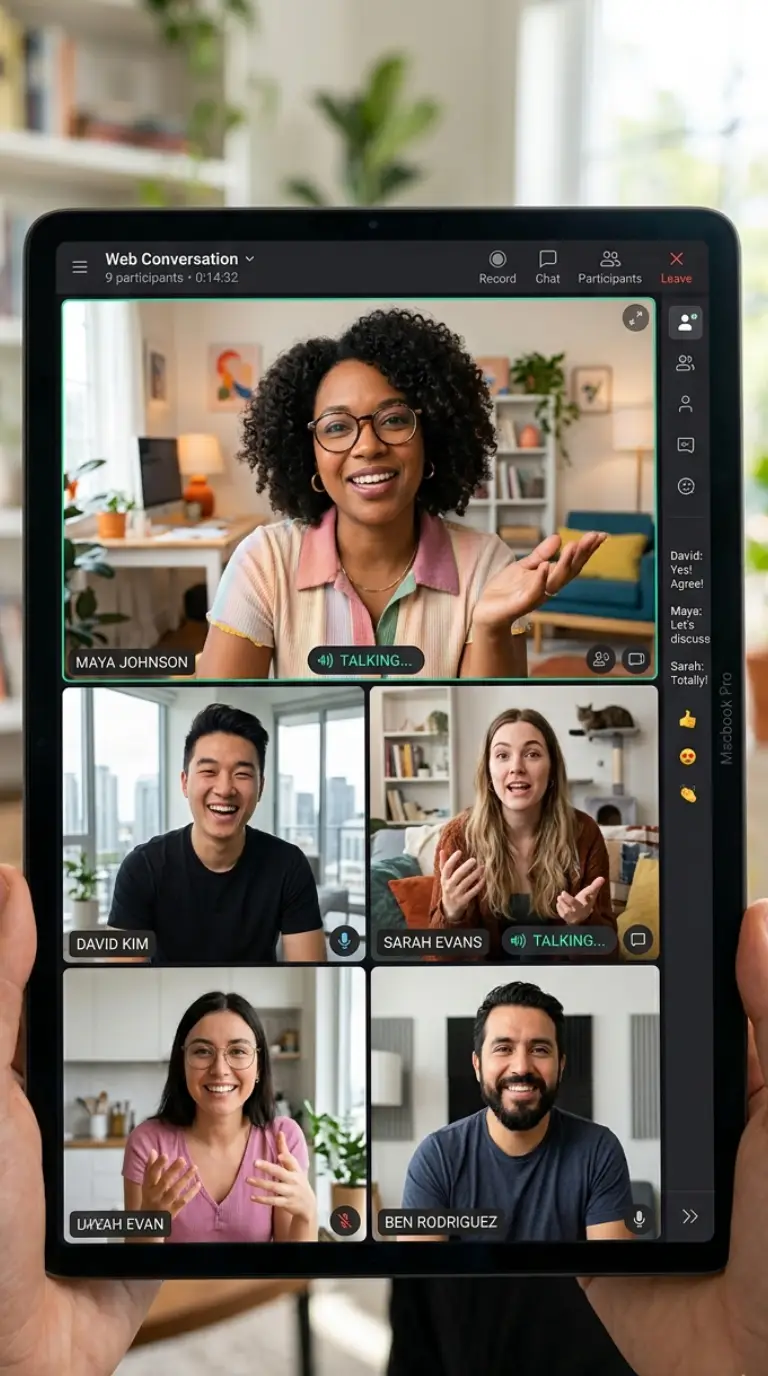
Why Live Conversation with a Stranger Remains Worth Having
Online communication has become progressively more asynchronous, more curated, and more structured around producing content rather than having conversations. The tools optimise for reach, for polish, and for the kind of exchange that can be screenshotted and shared. What gets lost in that shift is not trivial: the directness of a live exchange, the irreversibility that makes words mean something, and the specific quality of talking to someone you have never heard of before and may never speak to again.
Liveness is not a technical specification — it is what makes the exchange meaningful. A message sent and received later can be crafted. A live conversation cannot. The other person’s real reaction is visible or audible the moment something lands. That accountability to the actual response, rather than the imagined one, produces a kind of engagement that no asynchronous format can replicate regardless of how sophisticated the notification system becomes.
The stranger dimension is what makes each live session genuinely new. A live conversation with someone you know is constrained by the relationship you already have with them. A live session with someone you have never met is constrained only by the conversation itself. What gets said is determined by what is actually worth saying, not by the social context surrounding the relationship. That is a rare conversational condition, and it is one this platform was built specifically to produce.
4.5 million live sessions happen here every day. The people starting them have chosen real-time, face-to-face engagement with an unknown person over every other option available to them. That choice is a statement about what the live format delivers when the platform supporting it is built well. We built it well. Come and see.
Where Live Sessions Are Happening Right Now
Live sessions are distributed across 155 countries with no hour of the day at which the pool is inactive. The four regions below account for some of the highest concentrations of current live activity and reflect where platform growth has been most sustained recently.
The Iberian World
Spain, Portugal, and their respective linguistic communities in Latin America and Africa form one of the most internally connected live-session clusters on the platform. Spanish and Portuguese are the two most commonly matched session languages after English, and users within this cluster demonstrate a particularly high rate of cross-regional matching — with sessions between European and Latin American participants being especially common.
The Lower Mekong
Thailand, Laos, and Cambodia generate a growing volume of live sessions, predominantly through mobile browser connections during evening hours local time. Thai is the most frequently selected language preference from this cluster. Infrastructure variability across the region is handled by the platform’s adaptive stream management, which maintains live connection quality across a wider range of bandwidth conditions than most comparable tools.
The Horn of Africa
Ethiopia, Eritrea, and Djibouti have all contributed growing session volumes over the past year, with Amharic and Tigrinya-preference sessions appearing in the matching pool with increasing frequency. Text-based live sessions account for the majority of activity from this region, driven by the lower bandwidth requirements of text relative to voice and video on mobile data connections that vary significantly by location.
The River Plate Region
Argentina, Uruguay, and Paraguay collectively generate some of the highest-duration live sessions in South America, with average conversation length from this cluster consistently exceeding the platform-wide mean. Evening hours in the River Plate timezone correspond to late-night activity in European markets, creating a cross-regional matching corridor that produces a distinctive range of conversation types and language combinations.
What First-Time Live Chat Users Want to Know
These ten questions address the live experience specifically — how the real-time connection works, what to expect during a session, and what happens when things go wrong. Use the footer contact link for anything not covered here.
1. How fast is the live connection established?
Under two seconds in the vast majority of cases. The matching engine draws from the active live pool, initiates the encrypted relay connection, and opens the session interface without any intermediate step. There is no loading screen, no buffering phase, and no warm-up period before the session is usable. The speed is consistent because our infrastructure is scaled specifically to handle the volume of simultaneous connection requests the platform receives.
2. Is the connection truly live or is there a delay?
The connection is live with latency below 80 milliseconds for the majority of session pairs. At that level of latency, the exchange is perceptually simultaneous — neither party is aware of any gap between speaking or typing and the other person receiving it. On less favourable connections the latency may rise but remains within the range that feels live rather than delayed. The relay node closest to both participants is selected automatically to minimise round-trip time.
3. What do I do if the live connection drops?
The platform attempts an automatic reconnection for thirty seconds without any action required from either participant. If the connection restores within that window, the session continues from where it left off. If it does not, both participants are returned to the start interface and can begin a new session immediately. No data from the dropped session is retained and neither participant is penalised for the disconnection in any way.
4. Can I switch between text, voice, and video during a live session?
Yes. All three modes are available throughout every session from a single interface. Switching between them takes one tap and does not interrupt or reset the session. The text panel remains accessible when voice or video is active. You can disable video and continue with voice, switch to text-only, or re-enable any channel at any point. Each mode change takes effect immediately and is visible to the other participant without any notification or prompt.
5. Does the platform work on a live mobile data connection?
Yes. Text live sessions require minimal bandwidth and work on any connection that can load a webpage. Voice sessions perform reliably on standard 4G connections. Video sessions use adaptive bitrate streaming that adjusts quality to match available bandwidth, keeping the session live at a lower resolution when necessary rather than dropping it. The platform has been optimised for the range of mobile data speeds common across our 155-country user base.
6. Is there a time limit on how long a live session can last?
No time limit is imposed by the platform. A live session can last from a few seconds to several hours, determined entirely by the two participants. There is no timer visible to either party, no warning when a threshold approaches, and no session interruption at any duration. The session remains live until one participant ends it or a connection issue is not resolved within the automatic reconnection window.
7. Can the other person record the live session?
The platform itself does not provide a recording function to any participant. Our infrastructure does not capture or store session content on either side. A participant could use third-party screen recording software available on their own device, which is outside the platform’s technical control. If you are sharing information you would not want recorded, the same caution that applies to any conversation — online or offline — applies here.
8. What happens to the session when I close the browser tab?
The session ends immediately and completely. Camera and microphone permissions are revoked. The encrypted stream ceases. No content from the session is retained on our servers. The other participant is returned to the matching pool for a new session. There is no background process that continues running, no notification sent to the other participant about the reason you left, and no record of the session stored anywhere accessible to either party.
9. How do I report inappropriate behaviour during a live session?
The report button is always visible within the active session window without any navigation required. Pressing it opens a brief description field alongside the live session. You submit the report and a human moderator receives it within minutes. The reported participant is suspended from new live sessions immediately on submission. You can end the session before, during, or after filing the report — none of those actions depends on the others.
10. Does the live experience cost anything now or in the future?
The live experience is free now and will remain free permanently. This includes live text, live voice, live video, all filters, and unlimited session duration — at no cost, with no account required, and with no mechanism through which a future decision could impose a cost on features currently available for free. The platform was built to sustain this model and has operated it consistently since launch.